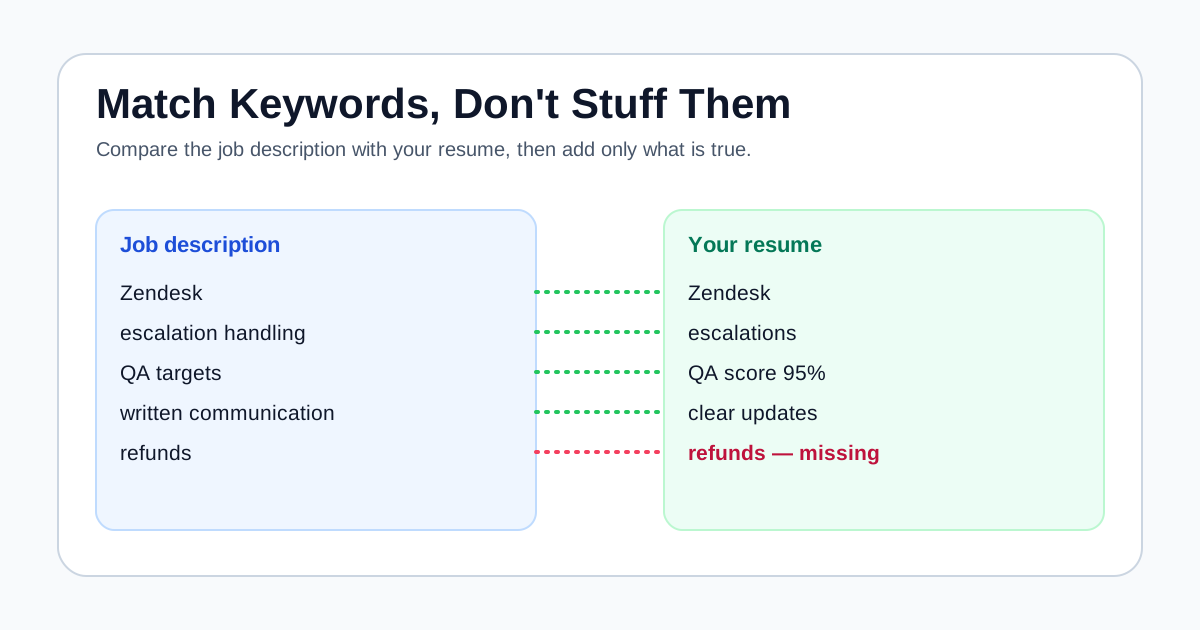
The best keywords come from the job description and your real experience.
Hard skills, tools, certifications, and role-specific processes are usually high-value terms.
Keyword stuffing can make a resume weaker, even when the terms are relevant.
What counts as a resume keyword
A keyword is any important term a recruiter or screening system may use to identify qualified candidates. This includes job titles, technical skills, software, certifications, methods, industries, and responsibilities.
Soft skills can matter too, but they are stronger when connected to evidence. For example, communication is stronger when your bullets mention documentation, client updates, training, reports, or stakeholder coordination.
- Tools: Excel, Salesforce, Figma, GitHub, Jira
- Skills: data analysis, bookkeeping, copywriting, customer support
- Certifications: CPA, NC II, PMP, Google Analytics
- Processes: onboarding, invoicing, QA testing, inventory control
How to find keywords from a job description
Read the job description twice. First, identify repeated skills and tools. Second, identify responsibilities that match work you have actually done. The strongest keywords are usually specific rather than generic.
If several postings for the same role repeat the same terms, those terms probably belong in your resume when they match your background.
- Highlight required skills and tools.
- Separate must-have terms from nice-to-have terms.
- Look for certifications, software, industries, and methods.
- Compare the posting against your resume with a keyword checker.
Where to put keywords naturally
Do not create a random keyword dump. Place terms where they help explain your work: summary, skills, experience bullets, projects, certifications, and education.
A keyword becomes stronger when it appears with context. Instead of listing customer support only in a skills section, add a bullet showing support volume, channels, response time, quality score, or customer outcome when true.
- Summary: mention the role focus and strongest relevant skills.
- Skills: list tools and capabilities you can defend.
- Experience: use keywords inside achievement bullets.
- Projects: add tools, methods, and outcomes.
How to avoid keyword stuffing
Keyword stuffing happens when a resume repeats terms without evidence. It can make the document harder to read and can damage trust when a recruiter reviews it.
Use the job description as a guide, not a script. Your resume should sound like your experience, written in language the employer recognizes.
FAQ
How many keywords should I add to my resume?+
There is no fixed number. Focus on the important terms from the job description that truthfully match your skills, work history, education, or projects.
Are soft skills good resume keywords?+
They can be useful, but they are stronger when paired with examples. Show communication, leadership, or organization through specific work, scope, and outcomes.
Can I use the same keywords for every application?+
You can keep core skills consistent, but each application should be reviewed against the specific job description.