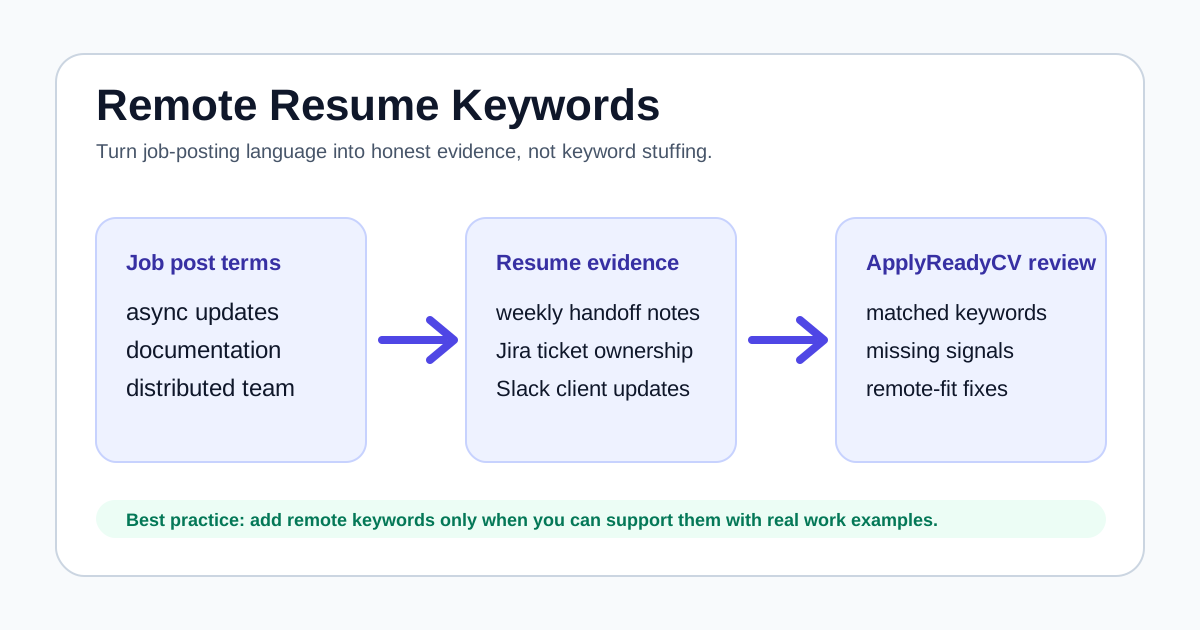
Remote keywords are strongest when they sit inside evidence, not in a loose list.
Tools matter, but the context around how you used them matters more.
A good remote CV balances ATS-friendly terms with human-readable proof.
Start with the job post, not a generic keyword list
Remote roles can use very different language. A customer support role may mention chat support, CRM, response time, escalation, and documentation. A software role may mention GitHub, pull requests, async reviews, Jira, ownership, and distributed team collaboration.
Read the job post and separate terms into three groups: tools you have used, responsibilities you have done, and remote work habits you can honestly support. That keeps the resume focused and avoids the weak feeling of a copied keyword list.
- Highlight repeated tools and systems.
- Mark responsibilities that match your real work.
- Look for schedule, time zone, or async communication language.
- Ignore terms you cannot explain in an interview.
Remote keywords that usually need evidence
Terms such as async communication, documentation, self-management, remote collaboration, and ownership can be useful. They are also easy to overuse. Add them only where the resume can show what they meant in practice.
For example, async communication is stronger when paired with weekly status updates, written handoffs, help center notes, ticket comments, SOPs, client reports, or project documentation.
- Async communication: status updates, written handoffs, documentation.
- Collaboration: Slack, Teams, Zoom, Notion, Jira, Trello, GitHub.
- Ownership: managed tickets, shipped deliverables, followed up without daily supervision.
- Time zone readiness: schedule overlap, global clients, distributed team routines.
Where to place remote keywords naturally
Use a short summary for your strongest remote-ready claim, then back it up in skills and experience. The skills section can list tools, but the experience section should prove how those tools were used.
A weak bullet says, 'Used Slack and Jira.' A stronger bullet says, 'Tracked support bugs in Jira and posted daily Slack updates so the remote product team could prioritize fixes.' The second version gives context, tools, and value.
- Summary: one sentence about role fit and remote-ready strengths.
- Skills: tools and methods you can actually use.
- Experience: bullets that connect tools to outcomes.
- Projects: remote collaboration proof from freelance, school, or volunteer work.
Remote keyword placement examples
| Section | Keyword examples | Proof to add |
|---|---|---|
| Summary | remote support, async communication, documentation | One sentence naming the role and strongest supported remote habit. |
| Skills | Slack, Jira, Notion, GitHub, Google Workspace | Only tools you can explain with real work or projects. |
| Experience | handoffs, ticket updates, distributed team, ownership | A bullet showing workflow, tool, audience, and result. |
| Projects | remote collaboration, client updates, timezone coordination | School, freelance, volunteer, or portfolio proof when relevant. |
Check for keyword stuffing before you send
Keyword stuffing is a risk for both software and human readers. If a term appears many times without new evidence, remove or rewrite it. A clear resume should show fit without sounding like a search engine page.
Before applying, paste the job description and your resume into ApplyReadyCV. Review missing terms, but add only the ones that are accurate and useful. The goal is a better application, not a bigger keyword count.
- Do repeated keywords add new proof?
- Can you explain each tool or remote-work claim?
- Do bullets still read naturally?
- Does the resume match the exact remote role you want?
FAQ
What are the best remote resume keywords?+
The best remote keywords are the ones in the job post that you can support with real work examples. Common terms include async communication, documentation, distributed team, Slack, Zoom, Notion, Jira, ownership, and self-management.
Should I add remote keywords if I have never worked remotely?+
Only add remote-ready skills you can prove through school, freelance, volunteer, hybrid, or project work. Written updates, online collaboration, documentation, and independent project ownership can still be relevant.
Can remote keywords help with ATS checks?+
They can help when they match the job description and appear naturally in your resume. They should not replace clear achievements, truthful skills, or readable formatting.