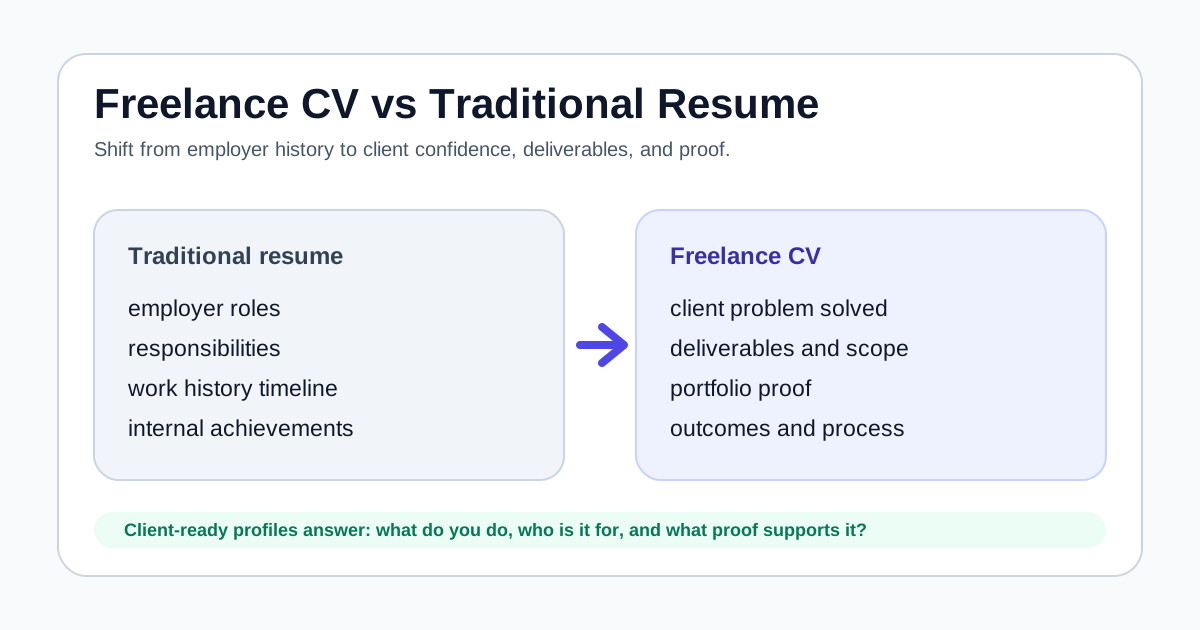
A freelance CV should lead with services, outcomes, and proof, not only job history.
Clients often care more about relevant examples than complete employment timelines.
The best freelance profile still stays honest, specific, and easy to verify.
Lead with the service a client wants to buy
A traditional resume often starts with a broad professional summary. A freelance CV should be sharper. The first section should tell a client what you do, who you help, and what kind of result or deliverable you can support.
For example, 'Virtual assistant with admin experience' is weaker than 'Virtual assistant for coaches and small teams, focused on inbox cleanup, calendar management, research, and weekly client reports.' The second version gives a client something concrete to evaluate.
- Name the service clearly.
- Mention the type of client or project when useful.
- Include tools only when they support the service.
- Avoid claiming every service at once.
Replace task lists with project proof
A job resume can rely on employer context. A freelance profile usually needs more visible proof. Selected projects, short case summaries, portfolio links, sample deliverables, and process notes can make a client feel safer about contacting you.
If you cannot share client names, use non-private details: industry, deliverable type, tools, timeline, scope, and outcome. A careful anonymous example is better than a vague claim.
- Landing page copy for a coaching offer.
- Weekly admin reports for a remote founder.
- Data cleanup for 1,200 CRM records.
- Product images edited for a marketplace launch.
Keep the timeline, but do not make it the whole story
Work history still matters. It can show reliability, domain experience, and transferable skills. But freelance clients usually do not need every internal responsibility from every old job.
Keep relevant roles, then rewrite bullets around client value. Instead of 'responsible for reports,' write what the reports helped someone do, how often you made them, what tools you used, and what changed because of the work.
- Keep roles that support your freelance service.
- Trim details that do not help the client decide.
- Connect old employment examples to current deliverables.
- Use dates honestly, but do not let dates bury proof.
Add a proposal-ready review step
Before sending a freelance application, compare your CV or profile against the client brief. Do the first 10 seconds answer the client's problem? Are the best examples visible? Are the keywords from the brief present only where they are true?
ApplyReadyCV's freelance mode can help with this check by reviewing service focus, portfolio signals, client-ready wording, project proof, and missing terms from the brief.
- Does the profile name a clear service?
- Can the client see proof without searching?
- Are outcomes more visible than generic claims?
- Does the profile match this brief without copying it?
FAQ
Can I use my normal resume for freelance applications?+
You can start from it, but you should adapt it. A freelance CV needs clearer services, selected projects, portfolio proof, and client outcomes than a standard employment resume.
Should a freelance CV include every past job?+
No. Include past work that supports the service you are selling. Trim details that do not help the client understand your fit.
What if I do not have paid freelance projects yet?+
Use relevant employment work, school projects, volunteer work, personal projects, sample work, or portfolio pieces. Be clear about what each example is and avoid pretending it was a paid client project.