Quick answer
Most job seekers should use the reverse-chronological format (most recent job first) because recruiters and ATS software expect it. Use a combination format to lead with skills while keeping a clear timeline, and be cautious with purely functional formats, which hide dates and can raise recruiter suspicion.
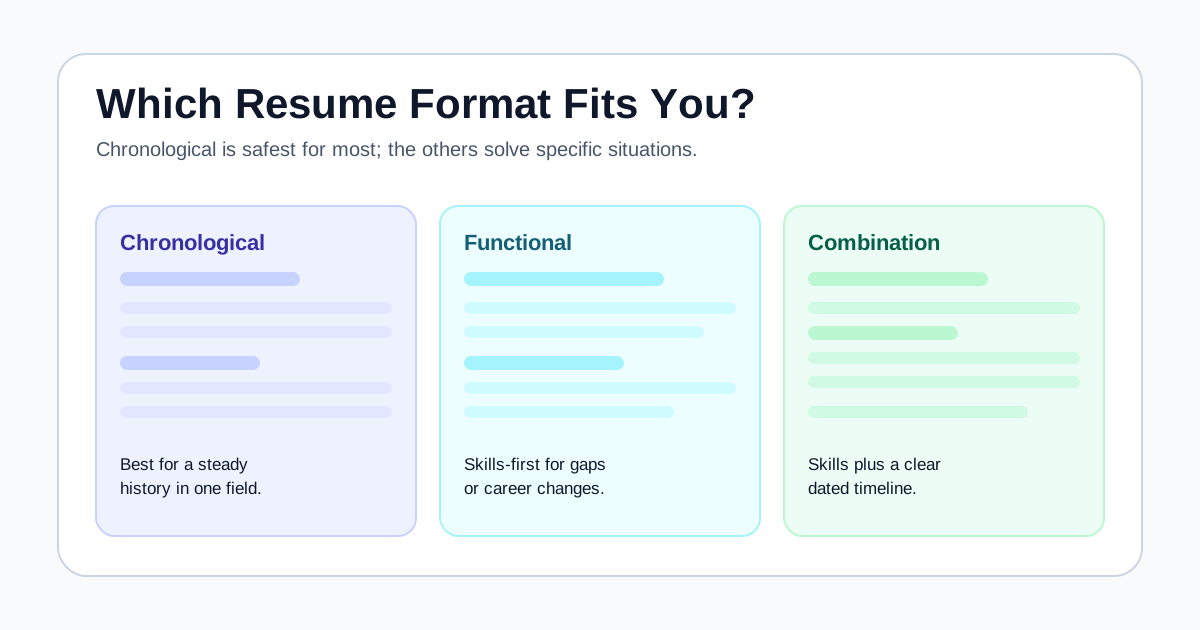
There are three main resume formats: reverse-chronological, functional, and combination (hybrid).
Reverse-chronological suits most people, while combination helps career changers, gaps, and mixed histories.
Purely functional formats can look like you are hiding something and often confuse ATS parsers.
The three resume formats, defined
When people search for the best resume format, they usually want to know which of three structures to build on. The difference between them is mostly about what leads the page and how your dates are handled. Reverse-chronological leads with a dated work history, newest role first. Functional leads with grouped skill categories and pushes dates down or out entirely. Combination, also called hybrid, opens with a short summary and a skills or highlights block, then still shows a full dated work history underneath.
None of these is universally correct. The right one depends on how strong, recent, and continuous your relevant experience is. A steady specialist and a career changer are answering different questions for the reader, so they benefit from different layouts. The table below shows the trade-offs at a glance before we look at each format in detail.
- Reverse-chronological: dated roles, newest first, achievements under each.
- Functional: accomplishments grouped by skill, timeline minimized or removed.
- Combination: skills or highlights up top, then a real dated history below.
- The wrong choice can hide your strengths or make a parser drop your experience.
Resume format trade-offs at a glance
| Format | Strength | Main risk |
|---|---|---|
| Reverse-chronological | Familiar to recruiters and easy for ATS to parse. | Exposes gaps and short stints plainly. |
| Functional | Front-loads skills for changers or limited history. | Reads as evasive and often confuses ATS parsing. |
| Combination | Highlights skills while keeping a trusted timeline. | Runs longer and needs careful editing to stay tight. |
Reverse-chronological: the safe default
The reverse-chronological resume lists your roles from most recent to oldest, each with an employer, job title, dates, and a few achievement-focused bullets. It is by far the most common format, which means recruiters read it quickly and applicant tracking systems parse it reliably. When your work history supports the job you want, the timeline itself is persuasive because it shows progression and recency.
This format is the strongest choice when your relevant experience is steady and continuous. Its weakness is honesty in the wrong direction: it puts any employment gaps, short stints, or off-target titles right in the reader's line of sight. That is not a reason to abandon it, but it is a reason to consider a combination layout if your history needs a little reframing before the dates appear.
- Best when you are staying in the same field or advancing within it.
- Works well for senior specialists whose depth shows through progression.
- Preferred by most large-company ATS portals.
- Least flattering for frequent job changes or a recent long gap.
Functional (skills-based): use with real caution
A functional resume groups your accomplishments under skill headings such as "Project coordination" or "Customer support" and either minimizes or removes the dated timeline. It is marketed as the fix for employment gaps, career changes, and thin experience, because it lets you lead with capability instead of chronology. On paper that sounds ideal, which is why it keeps getting recommended.
In practice it carries two real costs, and you should know both before choosing it. First, many recruiters have learned to read a skills-only layout as an attempt to hide dates, gaps, or a lack of relevant tenure, so it can create the exact suspicion you were trying to avoid. Second, applicant tracking systems expect skills to be attached to a specific job and date; when they are floating in a standalone block, parsers often mis-file them, drop them, or duplicate entries. If you are tempted to go functional because of a gap, our guide on handling an employment gap on a resume shows framing that keeps your dates and your credibility intact.
- Hides the timeline, which experienced recruiters notice immediately.
- Often parses poorly because skills are detached from roles and dates.
- Can bury recency, which many hiring managers weigh heavily.
- Rarely the best choice when a combination format solves the same problem more safely.
Combination (hybrid): the practical middle path
The combination format opens with a short professional summary and a grouped skills or highlights section, then follows with a genuine reverse-chronological work history complete with dates. It gives you a place to front-load the most relevant proof for a target role while still showing the continuous, dated timeline that recruiters and ATS software trust. For most people who cannot use a plain chronological resume, this is the honest, effective answer instead of going fully functional.
It shines for career changers, applicants returning after a gap, fresh graduates leaning on projects and internships, and anyone with a mix of relevant and unrelated roles. The highlights block lets you connect transferable skills to the new target before the reader reaches older titles, but nothing is hidden because the full history is still there. If you are switching fields, pair this format with the tactics in our career change resume guide so the summary and skills section speak directly to the new role.
- Lead with a summary and skills tied to the specific job you want.
- Keep a real dated work history so nothing looks concealed.
- Ideal for changers, returners, fresh graduates, and mixed backgrounds.
- Edit tightly, since two lead sections plus a full history can sprawl.
Which format fits your situation
Choosing the best resume format is really a matter of matching the layout to your circumstances and the role. The decision table below maps common situations to a recommended format and explains the reasoning, so you can pick deliberately rather than defaulting to whatever a template offered.
Treat these as strong starting points, not rigid rules. If a job posting or employer asks for a specific structure, follow that instruction first. And whichever way you lean, avoid a purely functional build unless you have a very specific reason, because the reader-trust and parsing costs usually outweigh the benefit.
Situation to recommended resume format
Match your circumstances to a format, then adapt it to the specific job.
| Your situation | Recommended format | Why |
|---|---|---|
| Steady, relevant experience in one field | Reverse-chronological | Your timeline is your strongest asset and parses instantly. |
| Changing careers | Combination | Lead with transferable skills but keep dates so nothing looks hidden. |
| Employment gap of several months or more | Combination | Highlights skills up top while a dated history reassures rather than alarms. |
| First job or fresh graduate | Combination or chronological | Pull education, projects, and internships forward instead of a thin timeline. |
| Frequent short stints or many moves | Combination | Group achievements by skill, but never delete the dates. |
| Senior specialist, deep single-track history | Reverse-chronological | Depth and progression read best in order. |
| Applying mostly through large-company ATS portals | Reverse-chronological or combination | Both parse reliably; avoid a purely functional layout. |
Make your chosen format ATS-safe
Structure decides how your story reads, but formatting decides whether the software can read it at all. Whatever layout you pick, keep a single-column design, use standard section headings such as Experience and Education, write real selectable text instead of images or text boxes, and save in a widely supported file type. A clever design that a parser cannot extract will undo the benefit of any format. Our guide on the best resume file format for ATS covers which file types stay readable.
Length matters too. A combination resume can drift onto a second page once you add a summary, a skills block, and a full history, so weigh whether the extra space earns its place using our comparison of a one-page versus two-page resume. When your draft is ready, paste the job description into ApplyReadyCV and run it locally in your browser to check readability, keyword coverage, achievements, and completeness before you apply.
- Use one column and conventional headings so parsers map your sections.
- Keep text as real characters, not graphics, tables-as-layout, or headers-and-footers.
- Confirm the file type is ATS-friendly before uploading.
- Re-check length and role fit after switching formats.
FAQ
What is the best resume format overall?+
For most people it is the reverse-chronological format, because recruiters expect it and ATS software parses it reliably. If your history has a gap, a career change, or many short roles, a combination (hybrid) format is usually the safer choice than a purely functional one.
Are functional resumes bad?+
Not always, but they carry real risks. Many recruiters read a skills-only layout as an attempt to hide dates or gaps, and applicant tracking systems often mis-parse skills that are not attached to a role and date. A combination format solves the same problems while keeping your timeline visible.
Which resume format is best for a career change?+
A combination format. It lets you lead with a summary and transferable skills aimed at the new role, then still shows a complete dated work history so nothing appears concealed. That balance is more persuasive than a fully functional resume that drops your timeline.
Does the resume format affect ATS parsing?+
Yes. Reverse-chronological and combination formats parse well when built as a single-column document with standard headings and real text. Functional formats parse worse because floating skill blocks are harder for software to attach to specific jobs and dates.
Sources and further reading
These references support the research and practical guidance used in this article.