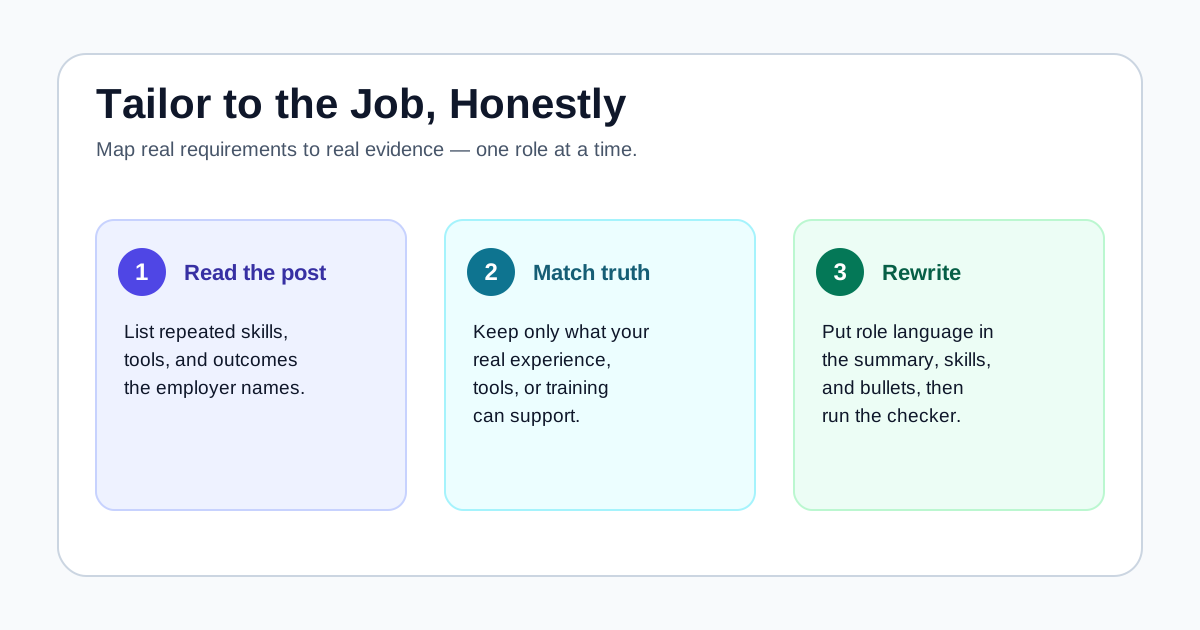
Start by identifying must-have skills, tools, responsibilities, and qualifications.
Add keywords only where they match real experience, training, projects, or education.
Use ApplyReadyCV to compare your resume with the job description before applying.
Map the job description
Read the posting and separate requirements into hard skills, tools, responsibilities, soft skills, credentials, and nice-to-have details.
Highlight repeated or specific terms. A tool, certification, or workflow named more than once is usually worth reviewing in your resume.
- Hard skills and tools
- Responsibilities and workflows
- Required qualifications or certifications
- Soft skills that need proof
Match only what is true
If the posting asks for Excel reporting and you have prepared Excel reports, that term belongs in the resume. If the posting asks for Salesforce and you have never used it, do not add it.
A truthful near match can still be useful. For example, if you used Zendesk and the job asks for ticketing systems, mention Zendesk and ticketing context.
Rewrite bullets around evidence
The best tailoring happens inside experience bullets. A keyword in a bullet should show action, context, and result.
Weak: 'Responsible for reports.' Stronger: 'Prepared weekly Excel reports from customer ticket data and shared summary notes with the support lead.'
Prioritize edits instead of rewriting everything
Start with must-have requirements that you can prove, then review repeated responsibilities and named tools. Nice-to-have phrases should come later. This order keeps the tailoring process focused and reduces the temptation to add unsupported keywords.
Keep a master resume with complete evidence and save a separate tailored copy for each important application. That makes it easier to compare changes, remove irrelevant details, and preserve accurate dates and job history.
Resume tailoring priority
| Priority | Job-description signal | Resume action |
|---|---|---|
| 1 | Required skill or credential | Show matching proof near the top |
| 2 | Repeated responsibility | Rewrite the most relevant experience bullet |
| 3 | Named tool or workflow | Add it only where actual use is clear |
| 4 | Nice-to-have preference | Include only if it improves relevance |
Check the tailored version
Paste the resume and job description into ApplyReadyCV. Review matched and missing terms, then decide which edits are accurate and useful.
The final resume should still sound natural to a human reviewer. Remove repeated keywords or claims you cannot support.
FAQ
Should I tailor my resume for every job?+
For important applications, yes. You do not need to rewrite everything, but you should align keywords, summary, skills, and bullets with the role.
Is copying the job description a good shortcut?+
No. Copying can make the resume sound unnatural and unsupported. Use job language only where it matches real evidence.
How many keywords should I add?+
There is no fixed number. Add the high-value terms that accurately describe your skills, tools, experience, education, or projects.