Quick answer
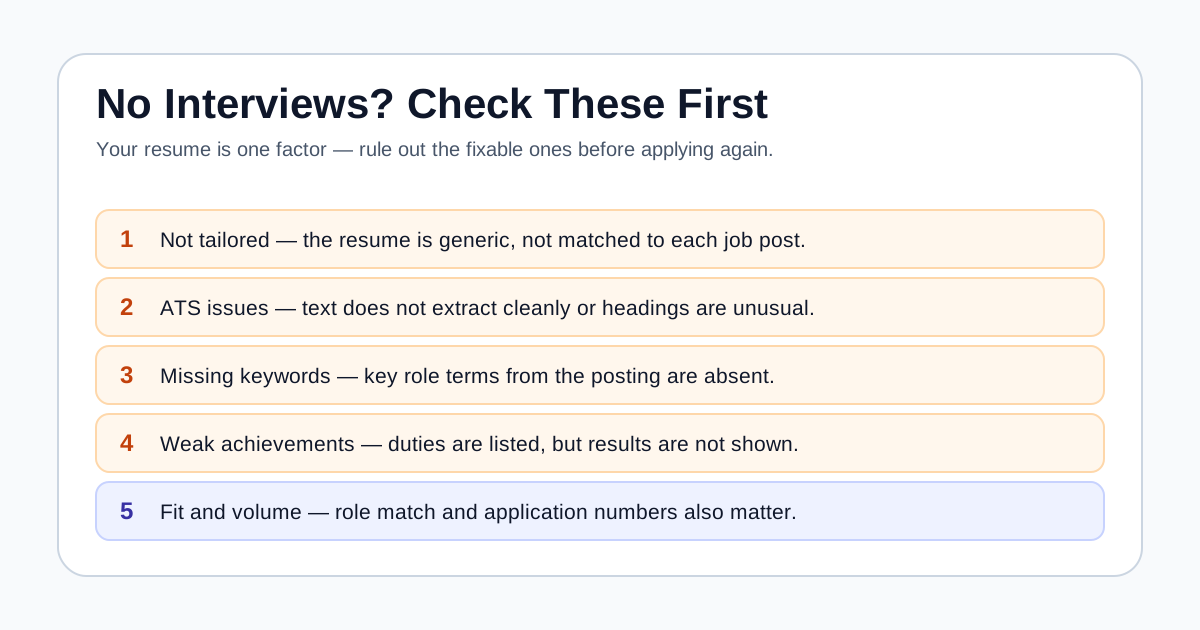
If applications get no response, check the resume first: is it tailored to each job, readable by ATS software, using the posting's keywords, and showing measurable achievements instead of duties? Role fit and application volume matter too, but these fixable resume issues are the most common cause worth ruling out.
Treat silence as a signal to diagnose, not proof that your whole resume is broken.
Most fixable resume causes are tailoring, readability, missing keywords, and weak achievements.
Where your applications stall points to the likely cause and the right fix to try first.
Your resume is one factor, not the whole story
Before you rewrite anything, separate the signals. Not getting interviews can come from the resume, from applying to roles that do not actually fit, from sheer volume and timing, or from a competitive market where a single posting draws hundreds of applicants in a few days. Treating every silence as a resume failure leads to endless editing that may not touch the real bottleneck.
A useful way to read the pattern is by where your applications stall. If you never hear back from online forms but referrals convert into calls, the issue is probably discoverability - readability or keywords - rather than your experience. If you already get screening calls but no first-round interviews, your resume is opening doors and the gap is somewhere else. Diagnose before you operate.
- Job fit - do you meet the must-have requirements?
- Application volume and how early you apply
- Seasonality and paused or cancelled requisitions
- Referrals and network, which shift the odds sharply
- Location and work-authorization constraints
- Competition - how many people apply to each posting
Reason 1: the resume is not tailored to the role
The most common fixable reason is a single generic resume sent to every posting. Employers, and the software they use, look for evidence that matches this job, and a resume aimed at everyone matches no one strongly. Tailoring does not mean rewriting from scratch each time - it means aligning your summary, skills, and top bullets with the specific title, tools, and responsibilities named in each post.
Read the job description and mark the recurring terms: the exact title, the must-have tools, and the responsibilities that repeat. Then make sure those truthful matches appear in your resume where the evidence genuinely supports them. Our guide on how to tailor a resume to a job description walks through this line by line, so you spend minutes per application rather than starting over.
- Mirror the exact job title where it accurately describes you
- Move the most relevant experience into the top third
- Match tool and skill names to the posting's wording
- Cut unrelated bullets that dilute the role's focus
Reason 2: the file is hard to read - for software and skimmers
If your resume looks polished but never gets a reply from online application forms, the file itself may be the barrier. Applicant tracking systems extract the text before a person ever sees it, and heavy columns, text boxes, images, and icons used as labels can scramble that extraction. A recruiter skimming for six to eight seconds also needs standard headings and a clean top third to find your value quickly.
The safe version keeps important details as normal text under standard headings such as Experience, Skills, and Education, exported to a file the employer accepts. If you are unsure which layout to use, comparing the chronological, functional, and combination formats will show which structure fits your history, and an ATS-friendly check confirms the text extracts cleanly before you submit.
- Standard headings: Experience, Skills, Education, Projects
- Keep core content in a single, readable column
- Use real text - not graphics - for anything important
- Keep dates and job titles consistent and paired
- Export a PDF or DOCX that reopens correctly
Reason 3: missing keywords and weak achievements
Two resume problems often travel together: the language does not match the role, and the bullets describe duties instead of results. Keyword overlap helps your resume surface in searches and signals fit, while measurable achievements give a human a concrete reason to call. A resume can be perfectly formatted and still read as forgettable if every line starts with "Responsible for."
Add the role's real terms where they truthfully apply - in the summary, the skills list, and your experience - without stuffing or claiming things you cannot back up. Then upgrade duties into outcomes with numbers: volume handled, percentages moved, time saved, quality maintained. The resume keywords guide covers placement, and the contrast below shows the difference a rewrite makes.
Weak duty bullets vs. achievement rewrites
Original examples showing why a bullet stalls and how to make it earn a callback.
| Weak bullet | Why it stalls | Stronger rewrite |
|---|---|---|
| Responsible for handling customer calls | No scale, no outcome, generic verb | Handled 60+ inbound calls daily while keeping CSAT at 92% across six months |
| Worked on social media | Vague scope and no measurable result | Grew a Facebook page from 1,200 to 8,500 followers in five months, tripling weekly reach |
| Did data entry tasks | Filler with no accuracy or volume | Processed 400+ CRM records per day at 99.6% accuracy with zero missed deadlines |
Reason 4: volume, fit, and timing you cannot see
Even a strong, tailored resume runs into factors that live outside the page. Popular postings can attract hundreds of applicants within days, so applying early genuinely matters. Roles that are a stretch on years of experience, seniority, location, or work authorization may filter you out regardless of wording. And a slow hiring season or a paused requisition can produce silence that has nothing to do with you.
This is why volume and fit deserve as much attention as phrasing. Twenty well-targeted applications to roles you genuinely match usually beat two hundred scattershot ones. Track which types of roles reply, and adjust the roles you target - not only the words on the page. Referrals change the odds sharply too, so a warm introduction is often worth more than one more resume tweak.
- Apply early - the first days of a posting matter most
- Target roles where you meet the must-have requirements
- Prioritize referrals and warm introductions
- Track reply rates by role type, not just by count
- Widen or narrow your target titles based on what responds
Your 10-minute diagnostic checklist
Use the pattern of where you stall to point at the most likely cause, then fix that one thing before changing everything at once. The table maps common symptoms to the most probable reason and to where you should address it, so your effort lands where it counts.
Once you have a hypothesis, run your resume and a target job description through the ApplyReadyCV checker. It reviews readability, keyword overlap, achievements, and completeness locally in your browser and returns a prioritized list of edits - guidance, not a promise of interviews. Re-check after each change so you can see which fix actually moved the needle.
- Is this resume tailored to this specific post?
- Does the text extract cleanly from the file?
- Do the role's keywords appear truthfully?
- Do bullets show measurable results, not duties?
- Do you genuinely meet the must-have requirements?
- Are you applying early and using referrals?
Symptom to likely cause to fix
| Symptom | Likely cause | Where to fix it |
|---|---|---|
| 50+ applications, near-zero replies | Generic, untailored resume or wrong-fit roles | Tailor to each post and check role fit before applying |
| Replies from referrals but not job boards | ATS readability or missing keywords | Run an ATS-friendly check and add role terms truthfully |
| Screening calls but no first interviews | Weak achievements or an unclear summary | Add measurable results and sharpen the top third |
| Interviews but no offers | Interview performance, not the resume | Shift effort to interview prep, not more resume edits |
FAQ
How many applications should I send before I assume my resume is the problem?+
There is no fixed number, but if you have sent 30 to 50 well-targeted applications with almost no replies, the resume or your role targeting is worth a hard look. Check tailoring, readability, and keywords first, since those are the fastest fixes.
I get interviews from referrals but not from online applications - why?+
That pattern usually points to discoverability rather than your experience. Referrals skip the software filter, so silence from online forms often means the file is hard to parse or is missing the role's keywords. Run an ATS-friendly check and align your terms with each post.
Could I be overqualified or underqualified instead of having a bad resume?+
Yes. Fit is a real factor. If you are far outside the posted range on experience, seniority, location, or work authorization, no wording will reliably fix that. Focus your applications on roles where you meet the must-have requirements and adjust the titles you target.
Will running a resume checker guarantee more interviews?+
No, and any tool that promises that is overstating what it can do. A checker flags readability, keyword, achievement, and completeness gaps so you can edit with evidence. It improves the resume as one factor - interviews still depend on fit, volume, timing, and how you interview.
Sources and further reading
These references support the research and practical guidance used in this article.