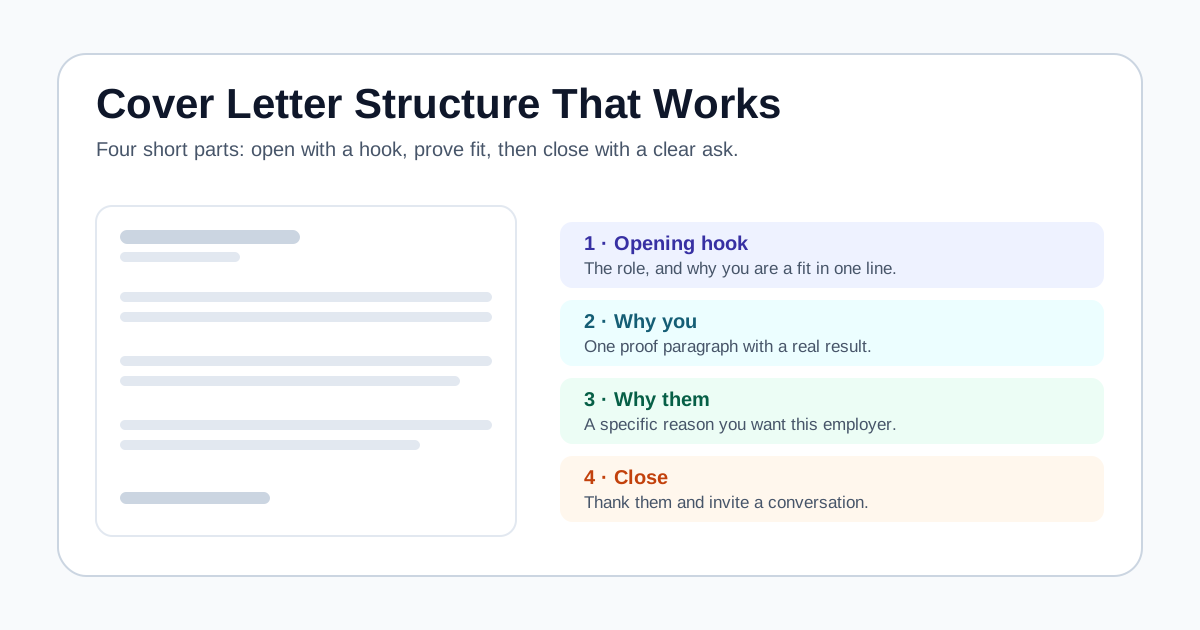
Use a five-part structure: header, opening hook, why-you and why-them body, an evidence paragraph, and a short close.
Do not repeat your resume line by line; expand on one or two proof points instead.
Keep it to one page, name the real company and role, and align it with the resume you submit.
What a cover letter is for (and what it cannot do)
A cover letter is a short, focused note, usually three or four short paragraphs on one page, that introduces you to one specific employer and makes a single clear argument: here is why my background fits this role. It is not a second resume, a personal essay, or a place to list every job you have held. Its job is to give a busy reviewer a reason to read your resume with more attention.
It helps to be honest about the limits. A cover letter cannot guarantee an interview, override a resume that lacks the required skills, or force a recruiter to read it, since some roles skim it and others skip it entirely. What a well-written letter can do is show that you understood the posting, connect your strongest evidence to the employer's actual need, and demonstrate that you can write clearly, which matters in most office, customer service, and remote roles.
The clearest way to think about it: your resume proves fit with scannable bullets and keywords, while your cover letter explains why one or two of those proof points matter for this company. If your resume and cover letter say exactly the same thing in the same words, one of them is wasted.
- The letter makes one argument: your fit for this specific role.
- It expands on selected evidence rather than repeating every resume bullet.
- Keep it to one page, ideally under 300 to 350 words.
- Write it assuming a reviewer will skim the first two lines before deciding to read on.
The five parts of a cover letter
Most effective cover letters follow the same simple skeleton. You do not need clever formatting or a design template. You need five parts, in order, each doing one job. Getting the order right is most of the work, because it moves the reader from who you are, to why this role, to the proof, to a polite close.
Use the table below as a blueprint you can fill in for any application. The lengths are guidelines, not rules, but the total should stay on one page. If a section starts running long, move the detail into a resume bullet instead, since the resume is the right place for a full list of evidence.
- Header: match the contact details on your resume so they look like one application.
- Opening: name the exact role and, ideally, where you saw it posted.
- Body: one paragraph on fit, one on evidence, so the argument stays easy to follow.
- Close: no hard sell and no promises about performance you cannot back up.
Cover letter structure at a glance
| Part | What it does | Rough length |
|---|---|---|
| Header | Your name and contact details, the date, and the company or hiring manager if known. | 2 to 4 lines |
| Opening hook | States the role you want and one specific reason you are a strong fit. | 1 to 2 sentences |
| Why you and why them | Connects your background to what the employer needs and shows you understand the company. | 1 short paragraph |
| Evidence paragraph | Backs the claim with one or two concrete results, projects, or examples. | 1 short paragraph |
| Close | Restates interest briefly, thanks the reader, and signs off professionally. | 2 to 3 sentences |
Write an opening that earns the next paragraph
The opening line decides whether the rest gets read, so avoid the tired template start. Lines like "I am writing to apply for the position advertised on your website" waste the most valuable sentence you have. The reviewer already knows you are applying. Use that space to name the role and give one specific, truthful reason you fit.
A strong hook usually pairs the role with a single concrete signal: a relevant result, a directly matching skill, or a genuine connection to the company's work. Keep it specific and defensible. If you cannot support a claim in the interview, do not open with it. The table below shows the difference between a generic opening and a sharper one for common global and Philippine job types such as BPO, virtual assistant, and customer service roles.
- Name the exact job title and, if space allows, where you found it.
- Lead with one specific, verifiable reason you fit.
- Skip "I am writing to" and "To whom it may concern" when you can find a name or team.
- Do not over-claim; the opening sets an expectation the rest of the letter must meet.
Weak versus improved opening lines
| Role | Weak opening | Improved opening |
|---|---|---|
| Customer service / BPO | I am writing to apply for the customer service representative role. | I am applying for the Customer Service Representative role because I resolved 40+ tickets a day at 95% CSAT and want to bring that consistency to your support team. |
| Virtual assistant | Please consider my application for the VA position. | Your posting for a Virtual Assistant matches how I already work: managing inboxes, calendars, and CRM updates for two founders across US time zones. |
| Fresh graduate | I recently graduated and am looking for opportunities. | As a recent Accountancy graduate who reconciled a live P200k student-org budget, I am applying for your Junior Accounting Associate opening. |
Connect why you and why them with real evidence
The middle of the letter is where most applicants blur into each other, because they describe themselves without ever mentioning the employer. Strong letters answer two linked questions in plain sentences: why does your background fit this role (why you), and why do you want this specific company or team (why them). The second question is what makes the letter feel written for one job rather than pasted into fifty.
Follow that with an evidence paragraph. Pick one or two proof points from your resume and expand them with brief context and a result. A simple pattern is situation, action, result: what the task was, what you did, and what changed. Numbers help, but honest, specific detail works even without them. The goal is to make the reviewer trust the claim, not to impress with buzzwords.
Keep both paragraphs tied to the posting. If the job stresses documentation and reducing repeat questions, your evidence should show exactly that, not a general list of everything you have ever done. Choosing the right proof is the same skill as tailoring a resume, and our guide on how to write a resume covers how to pick achievements that match a job description.
- Why you: match your top skills and results to the posted responsibilities.
- Why them: reference the company's product, mission, market, or a real reason you want in.
- Evidence: one or two examples, each with a clear action and a result.
- Prefer specifics ("cut refund processing from 3 days to 1") over adjectives ("detail-oriented").
A short, honest example you can adapt
Here is a compact example for a customer service applicant. It is deliberately short, specific, and free of promises about outcomes. Treat it as a pattern to adapt with your own true details, not a script to copy word for word, because a reviewer can spot a recycled template quickly.
Dear Hiring Team, I am applying for the Customer Support Specialist role at BrightCare. Your posting emphasizes fast, accurate email support and clear documentation, which is the work I enjoy and have done well. In my current role at a BPO handling a US retail account, I manage 40 to 50 email and chat tickets a day while keeping a 94% satisfaction rating. When I noticed the same three questions driving most contacts, I drafted five help-center articles and a reply macro, which reduced repeat tickets on those topics by about 30% over two months. I am drawn to BrightCare because your product serves small clinics, and I like support work where a clear answer genuinely helps someone's day. I would welcome the chance to bring the same care and consistency to your team. Thank you for your time and consideration. Sincerely, Maria Santos.
Notice what the example does: it names the role and company, states a specific reason for fit, gives one evidence paragraph with a result, adds a genuine why-them line, and closes politely, all in well under a page. It never claims the letter will win the job, and every number is the kind an applicant could defend in an interview.
- Open by naming the role and one reason you fit, not "I am writing to apply."
- Include exactly one strong, verifiable result rather than a list of many.
- Add a short, sincere why-them sentence tied to the company.
- Close with thanks and a normal sign-off; keep the whole letter under one page.
Format, proofread, and align with your resume
Once the writing is right, formatting is quick. Use a clean, single-column layout, a readable font, and the same contact details and name as your resume so the two documents look like one application. Keep it to one page, save as PDF unless the employer asks for another format, and name the file clearly, for example FirstName-LastName-Cover-Letter.pdf. Address a real person or team when you can find the name.
Proofread carefully, because a cover letter is a writing sample. Read it aloud, check the company and role names twice (the most common embarrassing error is the wrong employer from a previous draft), and confirm every claim also has support in your resume. A letter that promises a skill your resume never mentions creates doubt rather than confidence. Aligning the two documents is its own step, and our guide on how to make your resume and cover letter match covers that alignment in detail; you can also study finished samples in our cover letter examples.
Finally, remember the letter only helps if the resume behind it is solid. Before you send, run the resume you are attaching through a checker to confirm it includes the right role keywords, clear achievements, and readable sections for this specific posting. ApplyReadyCV reviews the resume side locally in your browser, so nothing is uploaded, and you can use the report to decide which one or two proof points your cover letter should expand.
- One page, single column, PDF unless told otherwise, clear file name.
- Match name and contact details to your resume exactly.
- Double-check the company name, role title, and every factual claim.
- Do not claim a skill in the letter that is missing from the resume.
- Strengthen the resume first, then build the letter around its strongest evidence.
FAQ
How long should a cover letter be?+
Keep it to one page, ideally three to four short paragraphs and under about 350 words. Reviewers skim, so a tight letter that makes one clear argument beats a long one that restates your whole resume.
Do I need a cover letter if the application says it is optional?+
If you can write a specific, tailored letter in a few minutes, include one, because it can add context that a resume cannot. If you only have time for a generic template, a strong, well-tailored resume is usually the better use of your effort.
How is a cover letter different from my resume?+
The resume is scannable evidence: keywords, achievements, dates, and skills. The cover letter is a short argument in plain sentences that expands on one or two of those proof points and explains why you fit this specific role. They should support the same story without repeating each other.
How do I start a cover letter without saying I am writing to apply?+
Name the exact role and pair it with one specific, truthful reason you fit, such as a relevant result, a directly matching skill, or a genuine connection to the company. That single concrete detail in the first sentence gives the reviewer a reason to keep reading.
Sources and further reading
These references support the research and practical guidance used in this article.