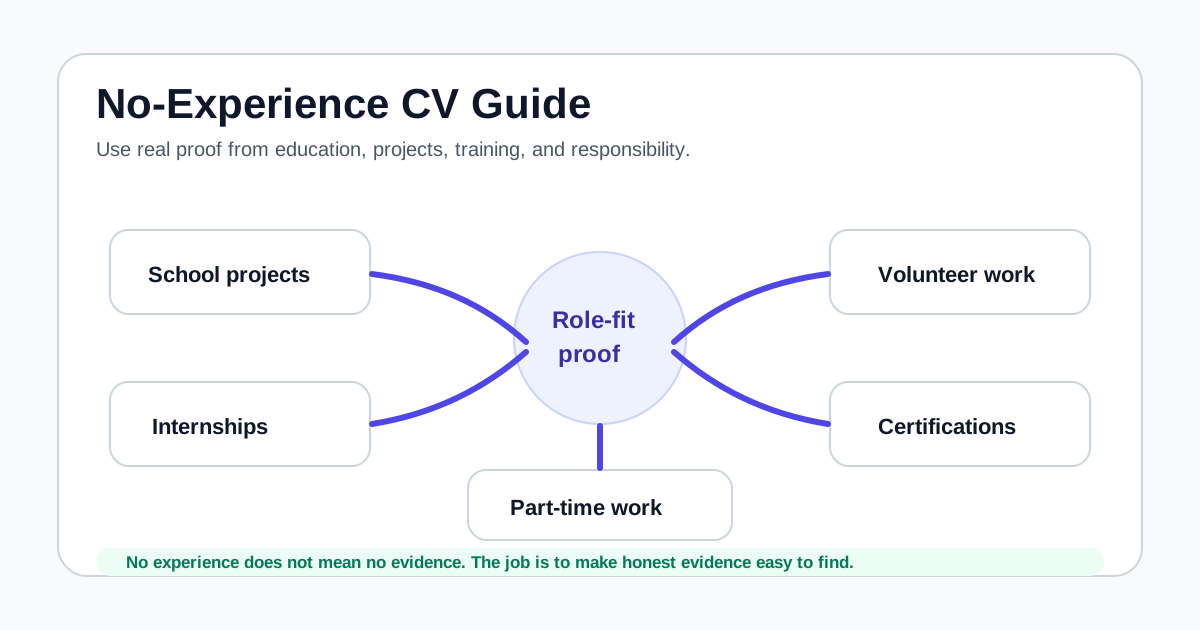
Entry-level CVs should lead with role direction and practical proof.
School projects, internships, volunteer work, and certifications can show real evidence.
A no-experience CV still needs keywords, clear sections, and honest examples.
Start with a clear target role
A no-experience CV becomes stronger when it has direction. If you are applying for admin assistant roles, customer service roles, IT support, retail, BPO, or design internships, make that direction obvious.
Your summary can mention your course, strongest tools, relevant projects, and the type of role you want. Keep it practical and avoid pretending to have experience you do not have.
- Target role or field.
- Education or training that supports the role.
- Relevant tools such as Excel, Google Workspace, Canva, POS, or basic coding tools.
- One or two projects, internships, or volunteer examples.
Use projects as evidence
Projects can prove skills when work history is limited. A school report, capstone, event plan, small website, design sample, data tracker, or volunteer process can become useful CV evidence.
Write project bullets like work bullets: what was the goal, what did you do, what tools did you use, and what was produced?
- Built a Google Sheets tracker for class inventory records.
- Designed social media posts for a student organization event.
- Prepared research summaries and presented findings to a group.
- Created a basic website or portfolio sample for coursework.
Include training, certifications, and volunteer work
Training and volunteer work help when they are relevant. Include certifications, online courses, licenses, workshops, student organization roles, community work, and part-time responsibilities that show useful skills.
Be specific. Instead of writing 'volunteer,' explain what you handled: registration, inventory, customer questions, event setup, reports, or coordination.
- Certification name, provider, and completion date when available.
- Volunteer role, event, and responsibility.
- Part-time work with customer, cash handling, admin, or support duties.
- Student leadership with planning, documentation, or team coordination.
Check the CV before sending
Entry-level applicants often lose points because the CV is too vague. Before applying, paste the job description and CV into ApplyReadyCV. Look for missing keywords, unclear sections, weak bullets, and practical hiring details.
The goal is not to sound senior. The goal is to make honest entry-level proof easy to understand.
- Does the CV show the target role?
- Are education, projects, and skills easy to find?
- Are job-posting keywords used truthfully?
- Can each claim be explained in an interview?
FAQ
What should I put on a CV if I have no work experience?+
Use education, projects, internships, volunteer work, certifications, tools, part-time responsibilities, and skills that match the job.
Should I hide that I am entry-level?+
No. Be honest, but make your evidence clear. Employers hiring entry-level applicants still want proof of effort, learning, tools, and responsibility.
Can school projects count as experience?+
They can count as evidence when they are relevant. Describe the project goal, your responsibility, tools used, and what was produced.